
After the Fire: How Restoration Works for DFW Homeowners, From Board-Up to Rebuild
House fires in North Texas climb every year as the weather turns. Space heaters, fireplaces that haven’t been used since March, kitchens working overtime for the holidays. When it happens, the fire department handles the emergency. What comes after is a construction project, and most homeowners have never run one under these conditions.
This is how restoration actually works, from the first hours to the day you move back in, and how to keep the process from becoming a second disaster.
The first hours: make it safe and stop the damage from spreading
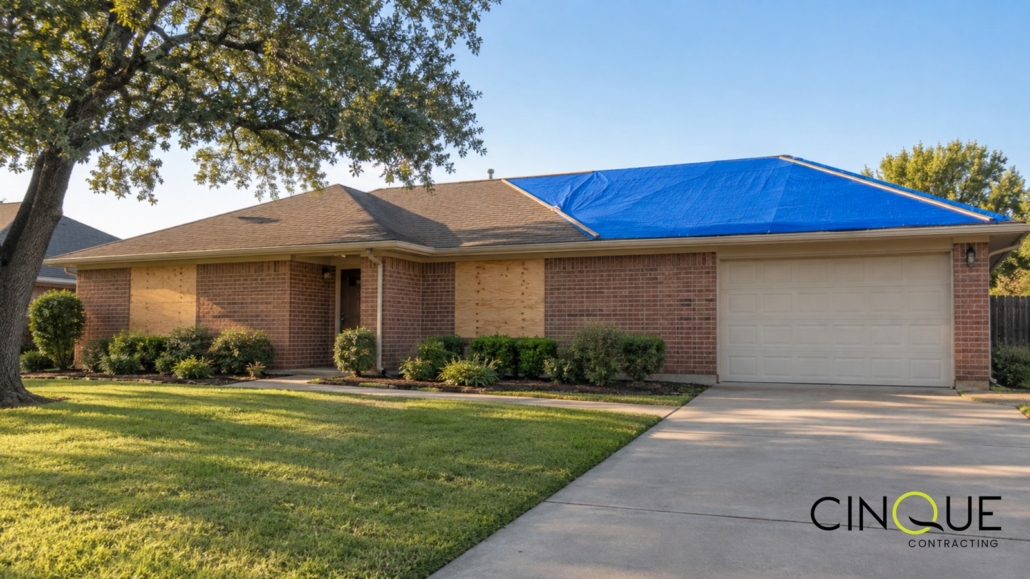
Nobody goes back in until the fire department clears the structure. Once they do, the priority is keeping the house from getting worse. That means boarding up broken windows and doors, tarping any roof openings, fencing if the property is exposed, and making sure gas and electric are shut off until they’re inspected.
Call your insurance carrier the same day. Most policies require prompt notice, and the carrier will usually authorize emergency board-up and mitigation right away. Photograph everything before anything is cleaned or moved. Then start a folder: every receipt, every call, every name. You’ll be glad you did.
If you can’t stay in the house, ask your carrier about additional living expenses coverage. Most homeowner policies include it, and it’s the part people forget to use.
What “fire damage” actually includes
The burned room is the obvious part. It’s rarely the biggest part.
Smoke and soot travel through the whole house, into closets, inside cabinets, through the HVAC system and into every duct. Soot is acidic and keeps damaging surfaces until it’s removed. Odor sinks into drywall, insulation, and framing and doesn’t come out with a fan and a window.
Then there’s the water. Firefighters put out a fire with a lot of it, and the rooms below and beside the fire are often soaked. Untreated, that water becomes a mold problem inside a couple of weeks.
Finally there’s heat. Framing near the fire can be charred through, or it can look fine and be structurally compromised. Wiring, plumbing, and ductwork in the walls may have melted or warped. This is why a fire that “only burned the kitchen” often ends up as a partial or full rebuild of a much larger area.
Working with the adjuster
Your carrier will assign an adjuster who inspects the property and writes an estimate for the covered damage. Their scope and your contractor’s scope rarely match on the first pass, and that’s normal. The gap usually comes from hidden damage the adjuster couldn’t see on a walk-through: soot inside wall cavities, heat damage to framing, water under the floors.
A restoration contractor who does this regularly writes a scope the carrier can work with, documents the hidden damage as it’s found, and handles the supplement requests when the scope grows. Ask your contractor up front whether they’ll manage that back-and-forth. If they won’t, you’ll be doing it yourself.
One more thing to check: your policy’s ordinance-or-law coverage. When a fire-damaged house is rebuilt, current code applies to the repaired areas, and code has changed since your house was built. That coverage pays for the upgrade. Not every policy has it. Know before you need it.
Why mitigation and rebuild should be one contractor
Fire restoration has two phases. Mitigation is the emergency work: board-up, water extraction, drying, soot and odor removal, selective demolition of what can’t be saved. Rebuild is the construction: framing, electrical, plumbing, drywall, finishes, and whatever it takes to make the house whole.
Many restoration companies only do the first half. They dry the house out, hand you a report, and leave. Now you’re finding a general contractor from scratch, in a stripped house, with a claim already half-spent. Details get lost in the handoff, the two scopes don’t line up, and every gap is a fight over whose problem it is.
Cinque Contracting handles both phases under one contract. The team that opens the walls is the same team that closes them, which means one scope, one point of contact with the adjuster, and nobody standing in your kitchen saying that part wasn’t in their bid.
Assessment, demolition, and the things you can’t see
Before rebuilding, the structure gets evaluated properly. On a serious fire that means a structural engineer looking at charred framing, roof trusses, and load paths, and a decision on what stays and what gets replaced. Anything with heat damage, soot penetration, or water saturation comes out. Anything sound gets cleaned, sealed, and kept.
Odor removal is its own specialty. It involves cleaning every surface, sealing framing and subfloor with an odor-blocking primer, treating the HVAC system, and often thermal fogging or ozone treatment for the whole envelope. Skip it and the house smells like a campfire every humid day for years.
The rebuild, and the chance to do it better
Once the house is clean, dry, and structurally sound, it’s a construction project. Permits, inspections, trades in sequence, finishes, punch list. The same discipline that runs a remodel runs a rebuild.
This is also the moment homeowners have options they didn’t have before. If the fire started in a cramped kitchen, the walls are already open. If the layout never worked, the framing is already exposed. Insurance pays to restore what was there; you can choose to pay the difference for what you actually want. A contractor who does both restoration and remodeling can price that difference honestly and build it in the same pass.
What to ask before you hire
- Do you handle both mitigation and rebuild, or will I need a second contractor?
- Who talks to my adjuster, and who writes and defends the supplements?
- Will a structural engineer evaluate the framing?
- How do you handle smoke odor, and what do you do with the HVAC system?
- Who pulls the permits and schedules the city inspections?
- What does the contract say about scope changes when hidden damage is found?
If the answers are vague, keep looking. A fire is the worst time to learn a contractor’s limits.
Cinque Contracting: restoration through rebuild, one contract
Cinque Contracting is a full-scope general contractor based in Dallas. We handle fire, water, and flood restoration for homeowners and multi-family owners across Dallas-Fort Worth, from the emergency board-up through the finished rebuild, and we work directly with your carrier’s adjuster the whole way.
If you’ve had a fire, or you’re a property manager who wants a restoration contractor lined up before you need one, contact us at constructdallas.com. We’ll walk the property, explain what we see, and put a real scope in front of you and your carrier.

Leave a Reply
Want to join the discussion?Feel free to contribute!