
Buying Land to Build in DFW? 8 Things to Check Before You Close
The dream usually starts the same way. You find a piece of land, maybe an acre outside Rockwall, a teardown lot in East Dallas, a few acres near Weatherford, and you start sketching the house in your head. Before you get attached, and definitely before you close, there’s a due-diligence list that separates a buildable lot from an expensive lesson. Here’s what we check when clients bring us a property, in the order it usually matters.
1. Zoning and permitted use
Confirm with the city or county what the land is zoned for and what can be built on it: minimum lot size, setbacks, height limits, accessory-structure rules. Unincorporated county land is looser, but cities and their ETJs (extraterritorial jurisdictions) impose requirements buyers don’t expect. Corner lots are the classic trap: many cities treat both street frontages as front yards, so you carry the larger setback on two sides and the buildable footprint shrinks fast. Get it from the jurisdiction in writing.
2. Utilities: the make-or-break line item
The most common budget-killer we see. Is there water at the road, or are you drilling a well? Sewer or septic? Electric at the property line, or a long run at your cost? In outlying counties, extending utilities can add serious money to a build, and a lot that’s priced attractively is sometimes priced that way because utilities are nowhere near it. If the property sits in a MUD (Municipal Utility District), understand the tax rate that comes with it.
3. Easements and access
Pull the title commitment and read the easements. Pipeline, utility, and drainage easements can carve big unbuildable strips out of a lot. Confirm legal access too. A lot without deeded road frontage or a recorded access easement can be effectively landlocked.
4. Floodplain and drainage
Check the FEMA flood map, then look past it. DFW’s flat terrain moves water in sheets during heavy storms, and plenty of lots outside any mapped floodplain still have drainage problems that dictate pad height and grading cost. Walk the lot after a rain if you can.
5. The soil under your slab
North Texas sits on expansive clay that swells when wet and shrinks in drought, which is why foundation repair is an industry here. A geotechnical report before you finalize the build budget tells your engineer what foundation the lot actually needs. The difference between a standard slab and an engineered solution on bad clay is real money, and you want that number before you own the dirt.
6. Survey and platting status
Get a current survey, not the one from 1998 in the seller’s drawer. Confirm the lot is a legally platted lot of record. If it has to be platted or replatted before a permit will issue, that’s a process with its own timeline and engineering cost, and it belongs in your schedule from day one.
7. Deed restrictions and HOAs
Even outside city limits, recorded deed restrictions can control minimum square footage, exterior materials, outbuildings, and whether you can build in phases. Read them before you close, not after.
8. The true cost of site prep
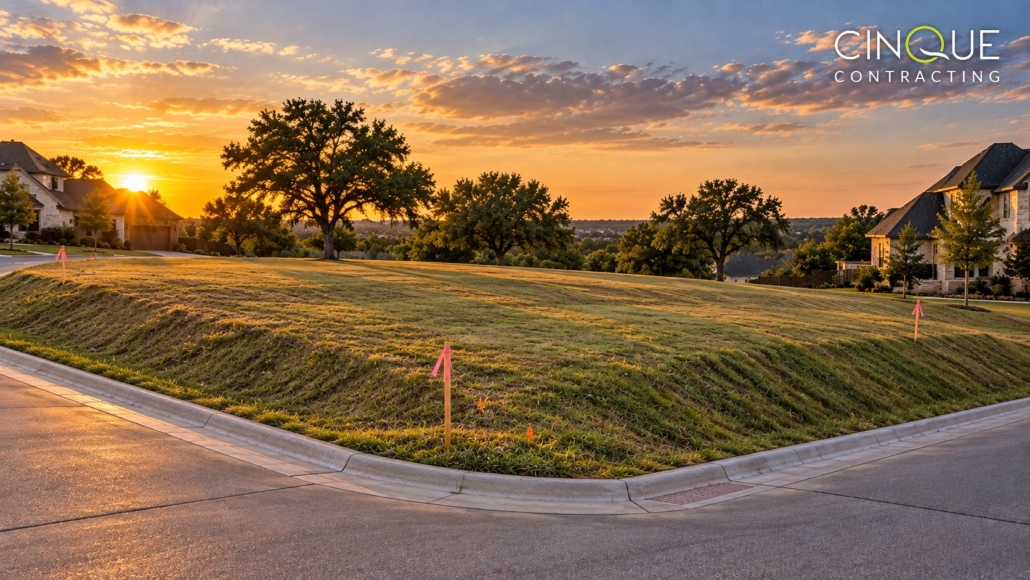
Trees to clear, structures to demo, a pad to build up, a long driveway, culverts at the road. And grade: a lot that sits well above or below the street may need retaining walls, imported fill, or a stepped foundation before the house can even start. That’s true of plenty of infill lots inside Dallas, not just acreage. Site work is part of the real cost of the land. When we evaluate a lot, we price the site, not just the house, so the land decision is made with the whole number on the table.
Two more: timing and taxes
Permitting and utility coordination move slower than buyers expect across DFW, so build your schedule from the jurisdiction’s real review timelines, not the seller’s optimism. And land carrying an agricultural exemption can trigger rollback taxes when its use changes. Ask the county appraisal district what the tax picture looks like once a house sits on it.
Protect yourself with the order of operations
Put a due-diligence period in the land contract and use it: title review, survey, jurisdiction check, utility verification, and a soil test where warranted, all before your earnest money goes hard. A few weeks of patience can save years of regret.
Where Cinque fits
Cinque Contracting works both sides of this decision. We’re a full-scope DFW general contractor with a land development lane, so we can evaluate a lot’s buildability, price the site work honestly, and then design and build the home on it. Looking at land anywhere in the metroplex? Bring us the listing before you close and we’ll tell you what the dirt will really cost.


Leave a Reply
Want to join the discussion?Feel free to contribute!