
Expansive Clay in DFW: What Your Soil Means for a Remodel or Addition
If you own a home in Dallas-Fort Worth, you already live on one of the most active soils in the country. Much of North Texas sits on expansive clay, a soil that swells when it is wet and shrinks when it dries. The ground under your house is not sitting still, and that matters before you take down a wall, add a room, or pour new concrete.
This is not a reason to avoid remodeling. It is a reason to ask a few questions in the right order.
What expansive clay actually does
Clay soil holds water. After a wet stretch it swells and pushes up on whatever sits on top of it. After a dry stretch it shrinks and pulls away, leaving gaps. North Texas swings between both, sometimes within the same year, so a foundation can see repeated lift and settlement.
Slabs and pier-and-beam foundations are designed with that in mind, but the soil still moves, and it does not move evenly. A corner near a big tree, a side where the gutters dump water, or a patch that never gets sun can behave differently from the rest of the house.
Signs your house is moving
Plenty of movement is normal and harmless. Some is a signal to look closer. Things homeowners notice include:
Doors and windows that stick, rub, or will not latch the way they used to
Cracks in drywall, especially diagonal cracks running from the corners of doors and windows
Gaps between the wall and the ceiling, or between trim and the wall
Cracks in brick mortar or stair-step cracking in masonry
Floors that feel slightly sloped or bouncy
Gaps at the edge of a tile floor or cracked tile
One sticky door is not a diagnosis. A pattern across several rooms is worth taking seriously.
Why it matters before you remodel
A remodel changes loads and changes how water behaves around the house. That is where soil movement and construction meet.
Removing or moving walls. A wall you plan to take out may be carrying load down to a specific point on the foundation. Where that load goes matters.
Additions. A new room has its own foundation, and it needs to behave with the old one, not against it. A new slab tied poorly to an existing one can crack or separate over time.
New flatwork. Patios, walkways, and driveways poured against the house can change drainage and can crack if the ground under them moves.
Finishes. Tile, stone, and rigid flooring are unforgiving over a floor that moves. Cracked grout and tile are often the first visible sign.
Planning for the ground first protects the work you are about to pay for.
Drainage is the part you control
You cannot change the soil, but you can control how much water reaches it. A lot of foundation trouble in DFW traces back to water management.
Grade. The ground next to the house should slope away from the foundation, not toward it.
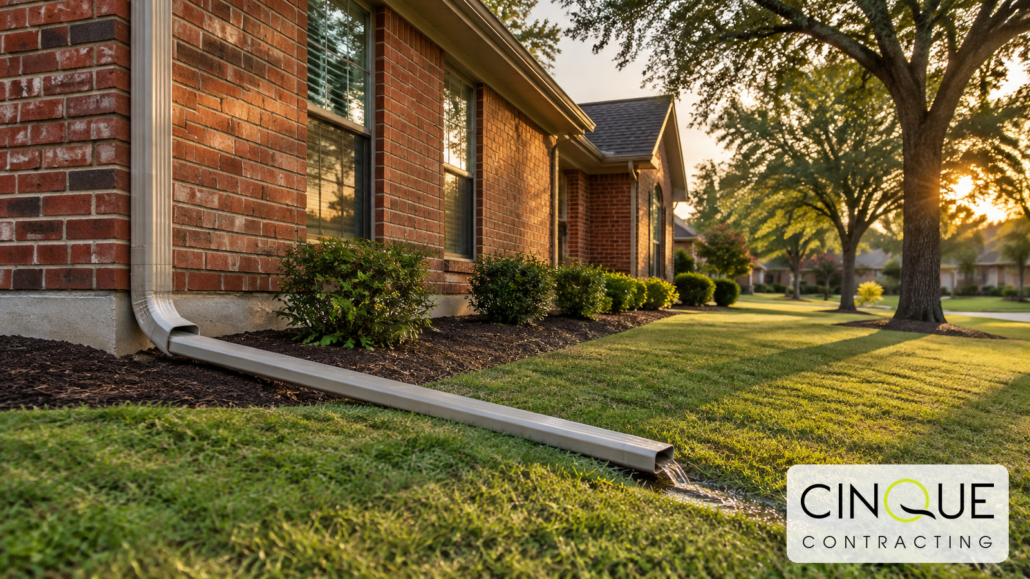
Gutters and downspouts. Downspouts that empty at the foundation soak the same spot every rain. Extensions that carry water several feet out make a real difference.
Landscaping. Beds that are higher than the slab edge, or that trap water against the wall, hold moisture where you do not want it.
Trees. Large trees close to the house pull moisture out of the soil during dry weather, and shrinking soil follows.
Even moisture. Many homeowners in this area water the soil around the foundation during long dry stretches to keep it from shrinking away. Whether that fits your home is a question for a foundation professional, since a leak or overwatering causes problems of its own.
Who should evaluate the foundation
A general contractor is not a foundation engineer, and you should not accept anyone telling you otherwise. If you see signs of movement, or your project touches the structure, the right first step is an evaluation by a structural engineer or a foundation specialist. They can tell you what is happening, what is cosmetic, and what needs to be addressed before other work begins. Cinque brings that evaluation into the plan rather than building around a problem nobody has measured.
Questions to ask your contractor
Before you sign anything for a remodel or addition in DFW, ask:
1. How will you find out what the foundation is doing before work starts?
2. If walls change or an addition is planned, who determines how loads are carried, and who puts it in writing?
3. How will new work tie into the existing structure?
4. What is the plan for drainage and grade around the new work?
5. What happens if we find movement or damage once walls are open?
A contractor who has answers to these has built in North Texas before. One who shrugs has not.
What to do first
If you are planning work, start with a walk-around. Look at grade, downspouts, trees, and the signs listed above. Take photos of cracks with a coin or ruler for scale and note the date, so you can see whether anything changes. If something looks like a pattern, get a foundation or structural evaluation before design decisions are final.
Where Cinque fits
Cinque Contracting is a general contractor serving DFW with new construction, remodeling, restoration, multi-family, and land development. We plan remodels and additions with the ground in mind: we bring in the right specialist when the foundation needs a professional answer, we coordinate the work around that answer, and we build with drainage in the plan from the start.
If you are thinking about a remodel or an addition and want a contractor who starts with the questions above, request a consultation at constructdallas.com.

Leave a Reply
Want to join the discussion?Feel free to contribute!